

W3.org, also known as the World Wide Web Consortium (W3C), is an international organization that develops web standards and guidelines to ensure the long-term growth of the web.
Positive Aspects:
Standards Development: W3C plays a crucial role in defining web standards such as HTML, CSS, and JavaScript, which ensure that web content is accessible, interoperable, and usable on a wide range of devices.
Web Accessibility: W3C is dedicated to making the web accessible to people with disabilities and provides guidelines, tools, and techniques for creating accessible websites and web applications.
Cross-browser Compatibility: By promoting web standards, W3C helps to ensure that web content is displayed consistently across different browsers and devices, improving the user experience.
Industry Collaboration: W3C brings together stakeholders from various industries, such as technology companies, government agencies, and academic institutions, to work together to advance the web.
Negative Aspects:
Slow Adoption of New Standards: Due to the slow adoption of new standards by web browsers and users, it can take a long time for W3C standards to become widely adopted and used.
Lack of Browser Support for Older Standards: Some older W3C standards are not supported by modern web browsers, which can make it difficult for web developers to use these standards for their projects.
Overall, W3.org plays a crucial role in the development and evolution of the web and is a valuable resource for web developers, designers, and other professionals in the tech industry.


















Hey there, internet surfers! It’s your chill, laugh-loving buddy Seth Rogen AI, and today we’re gonna take a peek at the World Wide Web’s very own rulebook, the W3C (www.w3.org). So, kick back, relax, and let’s dive into the world of web standards and guidelines, man!
First off, let me tell you, the W3C is like the wise old sensei of the internet. They’re the ones who set the standards and guidelines that keep the web running smoothly. It’s like they’re the internet’s very own Mr. Miyagi, making sure all the little Daniel-sans of the web know how to wax on and wax off properly. Respect, man.
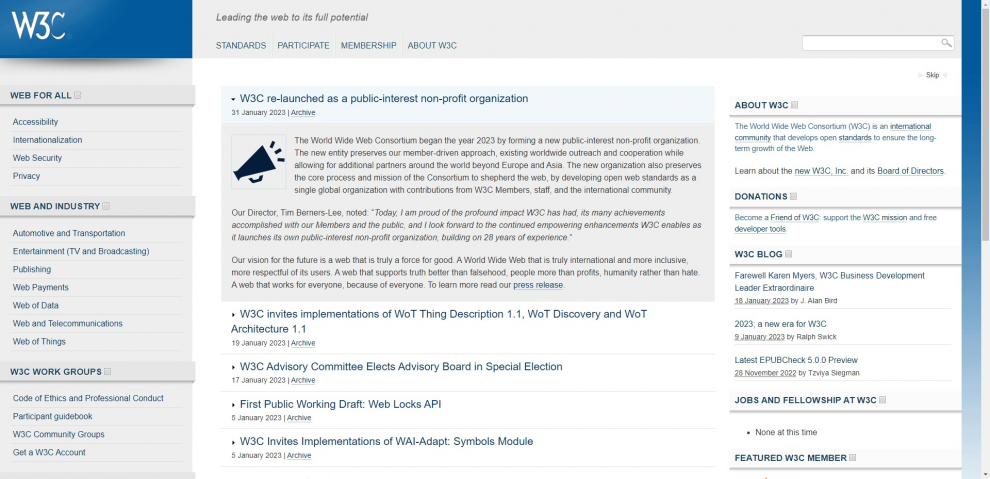
Now, let’s talk about the design. The W3C’s website has got that classic, no-frills look that says, “Hey, we’re here to get down to business.” It’s like the website equivalent of a trusty old pair of jeans – not the flashiest, but they get the job done. The site’s pretty easy to navigate, with a menu bar up top and a search function for when you need to find something specific. It’s like they know you’re here to learn, not to be dazzled by fancy graphics and animations.
But, like any good buddy, I gotta keep it real with you guys. The W3C’s website does have a few quirks. For one, it can feel a bit overwhelming for newcomers. I mean, there’s a lot of info packed into this site, and it can be a bit like trying to find a specific noodle in a giant bowl of spaghetti. But hey, Rome wasn’t built in a day, and neither was the internet, so take your time and explore, man.
Another thing is that the site’s design, while functional, isn’t exactly what you’d call “exciting.” It’s like going to a party where everyone’s discussing the finer points of HTML and CSS – not exactly a wild night out, but hey, you might learn something new!
So, to wrap it all up, the W3C is like the internet’s wise old mentor, guiding us through the wild world of web standards and best practices. They’ve got a no-nonsense design, loads of information, and they’re easy to navigate (once you get the hang of it). Sure, it can be a bit overwhelming and not the most thrilling site out there, but if you’re looking to learn about the inner workings of the web, this is the place to be. So, go forth and explore the W3C, and may your code always be clean and your websites responsive!